In Which Court Are There Only Three Judges Who Review Cases
The North Carolina Courtroom of Appeals is the state'southward only intermediate appellate court. Our judicial organization has three levels of courts: Trial courts (Commune courts and Superior courts), the Court of Appeals, and the Supreme Court of N Carolina. Appellate courts work differently from trial courts, because this Court hears appeals in cases already tried, either by a demote trial or a jury trial, or earlier an agency or administrative police judge. Most cases are appealed from the trial level to the Court of Appeals, although a few specific types of appeals go directly to the Supreme Court of North Carolina.
Judges of the Court of Appeals are elected statewide and serve eight-twelvemonth terms. The Court of Appeals currently has 15 judges who sit in panels of three judges to hear appeals, so there are always 5 panels. Cases are randomly assigned to the panels of judges. The judges also rotate panels frequently, so each judge can serve on a console with each of the other judges over time. The Court of Appeals reviews the case on appeal for errors of law or legal procedure; it decides just questions of law – not questions of fact. The Courtroom of Appeals does non receive new evidence or testimony from witnesses. Instead, this Courtroom has a record on appeal which includes the evidence and documents presented at the trial of the example. Depending on the complexity of the case, a record on appeal and other documents might include hundreds or thousands of pages. The appellate court makes its determination based on a review of the record, briefs, and arguments presented by each side.
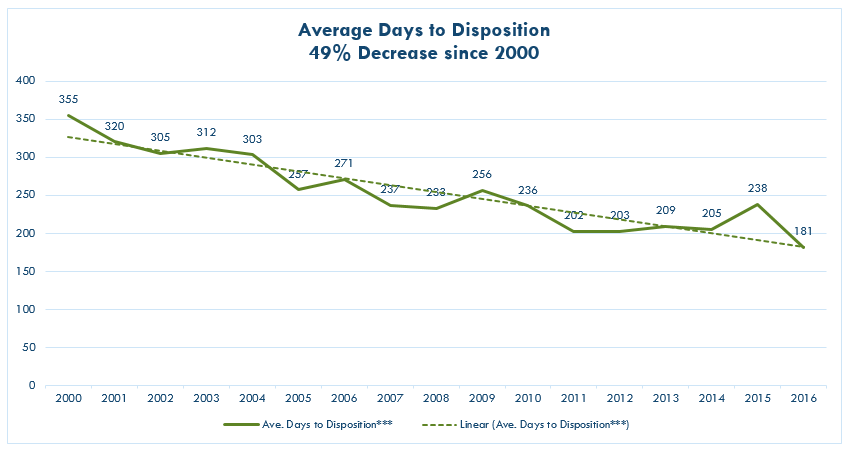
Each panel of judges usually decides 12 cases at each sitting, which is about every two weeks. After all 3 judges on a panel accept reviewed the record on entreatment and briefs, researched the law, and sometimes, heard oral arguments from the attorneys, the panel decides on the example. 1 gauge on the panel writes an opinion which explains the facts and legal ruling. If a member of the iii-judge panel disagrees with the determination of the majority, that judge may write a dissent and the parties in the case volition have a right of appeal to the Supreme Courtroom of North Carolina. If the determination is unanimous, further review of a conclusion of the Court of Appeals is express to those cases that the Supreme Court accepts in its discretion. Depending on the case, an opinion may be only a few pages or it may exist very long. On average, each judge must write about 2 opinions per week. Some people accept compared this process to having to write 2 term papers a week! Despite this caseload, the Court of Appeals has reduced the average disposition time for cases by about one-one-half since 2000, when the Court increased from 12 judges to 15 judges.
Every bit of 2017, the N Carolina General Associates approved en banc hearings before the Court of Appeals. In an en banc case, all of the judges on the Court sit together to hear and determine the case. En banc review may be granted just in cases where it is necessary to secure or maintain uniformity of the Court's decisions and the case involves a question of exceptional importance. A instance tin be heard en banc just if a majority of the judges on the Court vote to grant a political party'south motion for en banc review. Therefore, all of the judges must consider each movement for en banc review filed, whether or not en banc review is ultimately allowed.
The dockets of cases, records, and briefs in cases on appeal (except juvenile cases and a few others where the police force requires that the identity of the juveniles or parties be protected) are available online. The Courtroom of Appeals' opinions are available online.
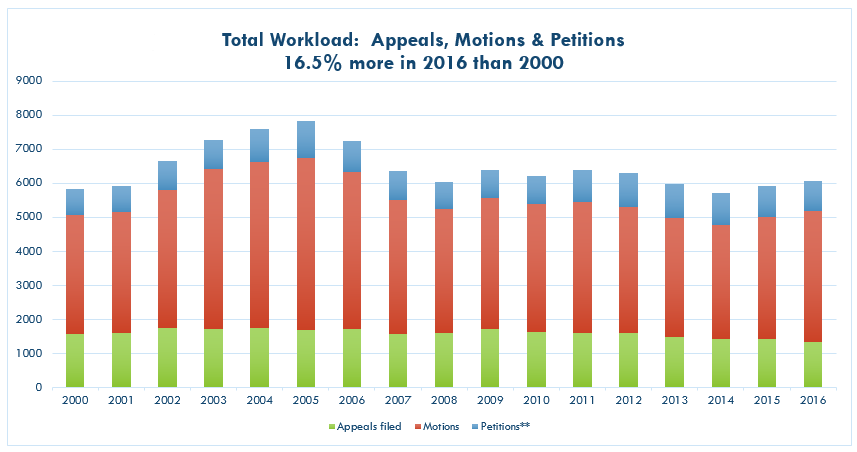
Likewise writing opinions from the appeals, the Court of Appeals likewise hears diverse types of motions and petitions and enters orders disposing of them. In fact, more motions and petitions are filed each year than appeals. Some motions and petitions will result in some other case on appeal, and some are disposed of separately. The tables below illustrate the numbers of appeals, motions, and petitions filed over the years from 2000 until 2016 and the average instance disposition times.
buergerhaductincer.blogspot.com
Source: https://www.nccourts.gov/courts/court-of-appeals/about-the-court-of-appeals
Belum ada Komentar untuk "In Which Court Are There Only Three Judges Who Review Cases"
Posting Komentar